We speak: English, 普通话, 粵語, Español, 한국어

MAKOplasty Robotic Joint Replacement in New York City

MAKOplasty® is an advanced robotic-arm-assisted procedure for patients with knee or hip osteoarthritis. It is quick and effective, repairing joint damage while sparing surrounding bone and ligaments. At NY Partners Orthopedics, board-certified orthopedic surgeon Ronald Huang, MD, uses MAKOplasty for partial knee replacement, total knee replacement, and total hip replacement. Call the office or book your appointment online to schedule a MAKOplasty consultation.

What Is MAKOplasty?

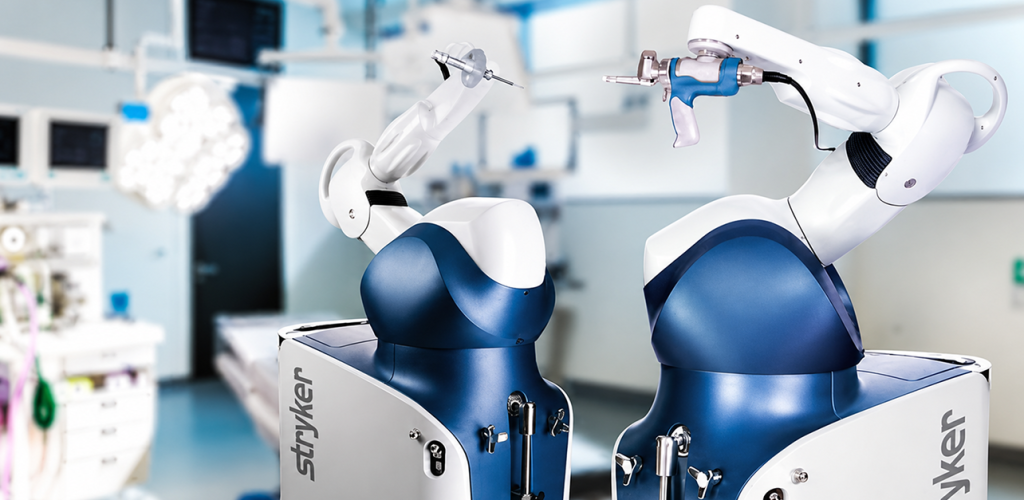
MAKO robotic arm-assisted technology (MAKOplasty) is a minimally invasive surgical procedure for the treatment of osteoarthritis, developed by Stryker Corporation. During the procedure, Dr. Huang operates from a computer console that controls a robotic arm, enabling greater precision and accuracy in accessing the damaged joint.

MAKOplasty Procedures

Dr. Huang performs three joint replacement procedures using the MAKOplasty system:

Partial knee replacement:

Partial knee replacement is appropriate for patients with mild to moderate knee osteoarthritis in the early to middle stages, particularly when the disease has not spread to all three compartments of the knee.

Total knee replacement:

Patients with middle- to late-stage knee osteoarthritis may qualify for total knee replacement. A MAKO prosthetic replaces the entire knee joint, relieving pain and restoring a full range of motion.

Total hip replacement:

MAKOplasty total hip replacement offers a safer, more precise alternative to traditional hip replacement surgery. The robotic console and built-in imaging system reduce the guesswork involved in hip placement.

Benefits of MAKOplasty

Compared with traditional orthopedic procedures, MAKOplasty offers:
Minimal blood loss
Smaller incisions
Faster recovery times
Greater precision in implant positioning
Preservation of healthy surrounding tissue

What to Expect During the Procedure

MAKOplasty procedures are performed at a nearby hospital or surgical facility. Dr. Huang administers general anesthesia before making several small incisions near the affected joint. He removes diseased bone and cartilage while carefully preserving as much natural tissue as possible, then inserts the prosthetic joint. Recovery time in the hospital is typically one to two days, depending on the procedure.
Request an Appointment